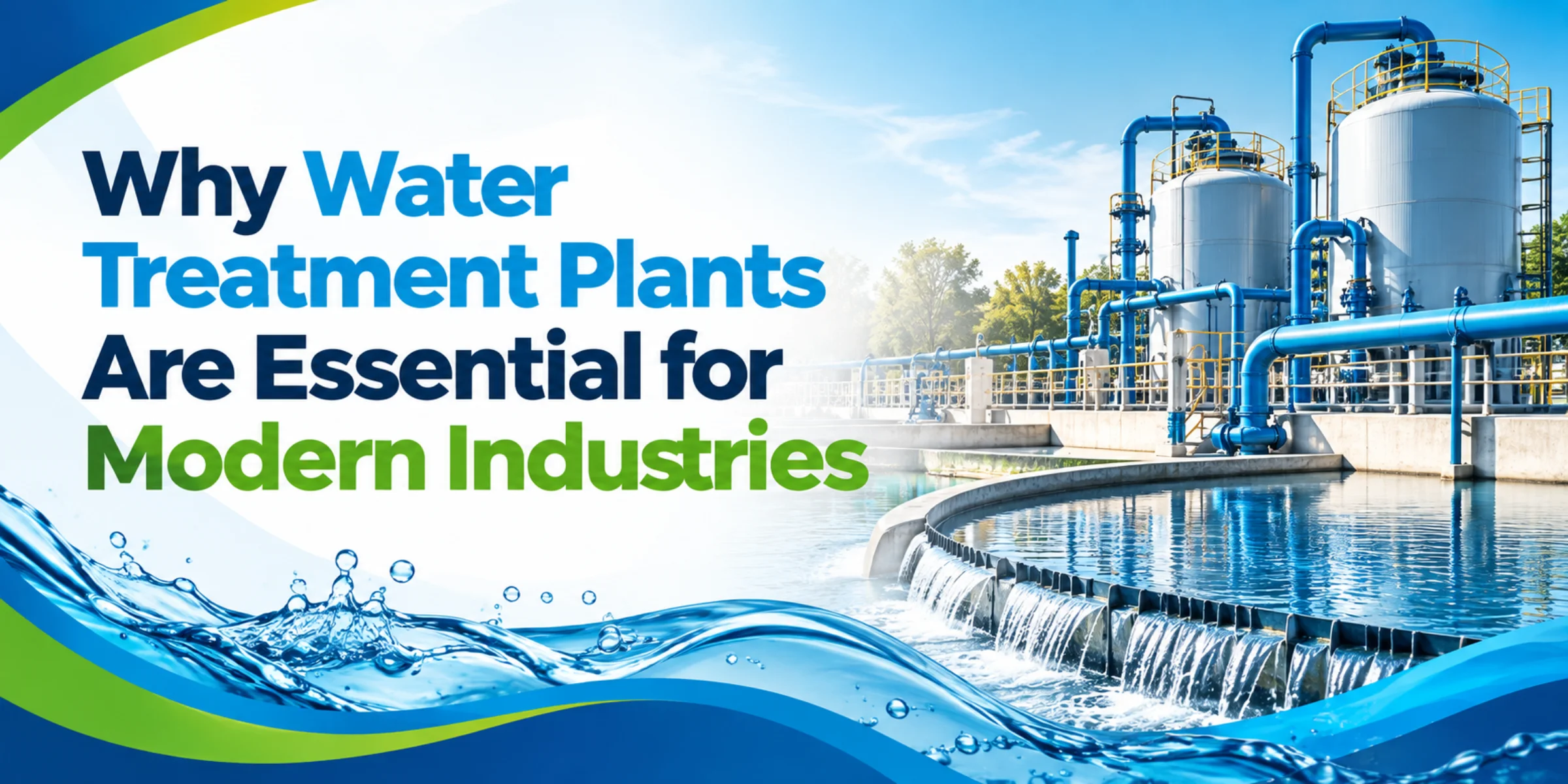
Water is one of the most important resources for modern industries. From manufacturing and pharmaceuticals to food processing, textiles, chemicals, power generation, and hospitality, almost every industrial sector depends on water for daily operations. However, industrial activities can generate large quantities of wastewater containing chemicals, suspended solids, oils, organic matter, and other contaminants.
This makes effective water and wastewater management essential for businesses that want to maintain operational efficiency, comply with environmental regulations, reduce costs, and protect natural resources.
A water treatment plant provides a systematic solution for treating raw water, process water, and industrial wastewater. By using appropriate physical, chemical, and biological treatment processes, industries can improve water quality and, in many cases, recycle treated water for further use.
For modern businesses, investing in a reliable industrial water treatment plant is no longer simply an environmental responsibility. It is an important part of sustainable and efficient industrial operations.
What Is an Industrial Water Treatment Plant?
An industrial water treatment plant is a specially designed system used to remove unwanted contaminants from water so that it becomes suitable for a particular application.
Depending on the industry and water quality requirements, a treatment plant may be designed to treat:
- Raw or surface water
- Groundwater
- Process water
- Boiler feed water
- Cooling water
- Industrial wastewater
- Sewage and domestic wastewater
- High-TDS wastewater
- Chemically contaminated wastewater
A modern water treatment plant manufacturer can design systems according to the quality of incoming water, wastewater characteristics, treatment requirements, plant capacity, and intended reuse of treated water.
Common technologies include filtration, clarification, softening, reverse osmosis, membrane treatment, biological treatment, disinfection, and sludge management.
Why Are Water Treatment Plants Important for Modern Industries?
1. Ensures a Reliable Supply of Quality Water
Many industrial processes require water with specific quality parameters. Ordinary untreated water may contain hardness, suspended particles, microorganisms, dissolved salts, iron, chemicals, and other impurities.
Using an appropriate industrial water treatment system helps industries produce water that meets their operational requirements.
For example, treated water may be required for:
- Manufacturing processes
- Boiler operations
- Cooling systems
- Washing and cleaning
- Pharmaceutical production
- Food and beverage processing
- Chemical manufacturing
- Electronics manufacturing
Consistent water quality can help industries maintain stable production processes and reduce problems caused by unsuitable water.
2. Helps Reduce Industrial Water Pollution
Industrial wastewater can contain a variety of pollutants. If wastewater is discharged without appropriate treatment, it can negatively affect rivers, lakes, groundwater, soil, and surrounding ecosystems.
An effective wastewater treatment plant helps remove or reduce contaminants before wastewater is discharged or reused.
Treatment may involve multiple stages, including:
- Preliminary treatment
- Primary treatment
- Biological treatment
- Chemical treatment
- Filtration
- Disinfection
- Sludge treatment
The exact treatment process depends on the characteristics of the wastewater and the required outlet water quality.
3. Supports Compliance With Environmental Requirements
Environmental regulations require industries to manage wastewater responsibly. Businesses need to ensure that their wastewater treatment and disposal practices meet applicable requirements.
A properly designed ETP (Effluent Treatment Plant) can help industries manage wastewater generated during manufacturing and other industrial activities.
An ETP can be particularly important for industries such as:
- Textile manufacturing
- Pharmaceutical manufacturing
- Chemical industries
- Food processing
- Dairy industries
- Distilleries
- Automobile manufacturing
- Metal processing
- Paper industries
Effective treatment and monitoring can help businesses maintain responsible wastewater management practices.
4. Reduces Water Consumption
Freshwater resources are limited, while industrial water demand continues to grow. One of the most effective ways industries can reduce freshwater consumption is by treating and reusing water.
A modern treatment system can enable treated wastewater to be reused for suitable non-potable applications, such as:
- Cooling towers
- Gardening and landscaping
- Equipment washing
- Floor cleaning
- Flushing
- Certain manufacturing processes
Water recycling reduces dependence on fresh water and can contribute to a more sustainable industrial operation.
5. Helps Reduce Operational Costs
Although installing a water treatment plant requires an initial investment, an efficiently designed system can generate long-term financial benefits.
Water recycling can reduce freshwater purchasing costs and wastewater disposal expenses. Proper treatment can also help protect industrial equipment from problems associated with untreated or poor-quality water.
For example, excessive hardness can contribute to scaling in boilers, heat exchangers, pipelines, and other equipment. Appropriate water treatment can help control such issues and support equipment efficiency.
The overall financial benefit depends on factors such as plant capacity, water consumption, wastewater characteristics, treatment technology, operating costs, and the level of water reuse.
6. Protects Industrial Equipment
Water quality has a direct impact on industrial machinery and equipment.
Hard water, dissolved salts, suspended particles, corrosive substances, and other contaminants can contribute to:
- Scaling
- Corrosion
- Fouling
- Blockages
- Reduced heat-transfer efficiency
- Increased maintenance requirements
A suitable water purification plant can help control these contaminants and provide water appropriate for specific industrial applications.
This can support better equipment performance and help reduce unexpected maintenance problems.
Major Types of Water Treatment Plants Used in Industries
Different industries have different water treatment requirements. Therefore, treatment plants are designed according to the specific application.
Effluent Treatment Plant (ETP)
An Effluent Treatment Plant is designed to treat industrial wastewater generated during manufacturing and production activities.
ETPs may use physical, chemical, and biological treatment methods to reduce pollutants before wastewater is discharged or reused.
Sewage Treatment Plant (STP)
A Sewage Treatment Plant treats domestic sewage generated from offices, factories, residential facilities, hotels, institutions, and other establishments.
STPs generally focus on removing organic matter, suspended solids, and other pollutants from sewage.
Reverse Osmosis Plant
A Reverse Osmosis (RO) plant uses a semi-permeable membrane to remove dissolved salts, minerals, and other contaminants from water.
Industrial RO plants are widely used where low-TDS or high-purity water is required.
Water Softening Plant
Water softeners are used to reduce hardness-causing minerals such as calcium and magnesium.
Softened water can be beneficial for applications where hardness may cause scaling and operational problems.
Ultrafiltration Plant
Ultrafiltration uses membrane technology to remove suspended solids, colloids, bacteria, and other larger contaminants.
It can be used as part of a larger industrial water treatment process.
Role of Advanced Technology in Industrial Water Treatment
Modern water treatment plants are becoming more efficient through advances in membrane technology, automation, monitoring systems, and process control.
Automation can help operators monitor important parameters and maintain consistent treatment performance.
Modern systems may incorporate technologies such as:
- Reverse osmosis
- Ultrafiltration
- Microfiltration
- Multimedia filtration
- Activated carbon filtration
- Biological treatment
- Membrane bioreactors
- Zero Liquid Discharge systems
- Chemical dosing systems
- Automated monitoring and control
The appropriate technology depends on the application rather than using a single solution for every industry.
Water Recycling and Sustainability
Sustainability has become an increasingly important consideration for modern businesses. Industries are under growing pressure to reduce resource consumption and improve environmental performance.
Water treatment plants support these objectives by enabling businesses to treat wastewater and potentially reuse it.
Instead of following a simple “use and discharge” approach, industries can move toward a more circular water management model:
Fresh Water → Industrial Process → Wastewater → Treatment → Reuse → Reduced Freshwater Demand
This approach can help industries use water more efficiently while reducing the amount of wastewater requiring disposal.
Choosing the Right Water Treatment Plant
Selecting the right treatment system requires careful analysis. Industries should consider several factors before investing in a plant.
Water Quality
The first step is understanding the physical, chemical, and biological characteristics of the water or wastewater.
Treatment Capacity
The plant should be designed according to current and anticipated water requirements. Undersized systems may not handle peak loads, while oversized systems may increase unnecessary capital and operating costs.
Treatment Technology
The selected technology should match the contaminants and desired treated-water quality.
Operating and Maintenance Requirements
Industries should consider energy consumption, chemical requirements, membrane replacement, spare parts, maintenance, and operator requirements.
Water Reuse Goals
If the objective is water recycling, the treatment plant should be designed according to the quality required for the intended reuse application.
Working with an experienced water treatment plant manufacturer can help businesses evaluate these factors and develop an appropriate treatment solution.
Why Industries Should Invest in Professional Water Treatment Solutions
A water treatment plant is more than a piece of equipment. It is an integrated system that needs proper design, installation, operation, monitoring, and maintenance.
Professional water treatment companies can assess water quality, understand the industrial process, recommend suitable treatment technologies, and develop customized solutions based on capacity and performance requirements.
A properly engineered system can help businesses achieve:
- Better water quality
- Improved operational efficiency
- Reduced freshwater consumption
- Wastewater pollution control
- Increased water recycling
- Better equipment protection
- More sustainable operations
- Improved wastewater management
Conclusion
Water is fundamental to industrial growth, but responsible water management is equally important. As industries expand, the demand for clean process water increases while the need to manage wastewater responsibly becomes more critical.
Water treatment plants provide industries with a practical way to manage this challenge. From ETP and STP systems to RO plants, filtration systems, softeners, and advanced membrane technologies, different solutions can be combined to meet specific industrial requirements.
By investing in an appropriately designed industrial water treatment plant, businesses can improve water quality, support efficient operations, reduce freshwater consumption, enable water reuse, and manage wastewater more responsibly.
For modern industries, effective water treatment is therefore not simply an environmental requirement—it is an important component of operational efficiency, resource conservation, and long-term industrial sustainability.
If your business requires a customized solution for industrial water purification, wastewater treatment, water recycling, or effluent management, choosing an experienced water treatment plant manufacturer and supplier can help you identify the right technology and system for your specific requirements.